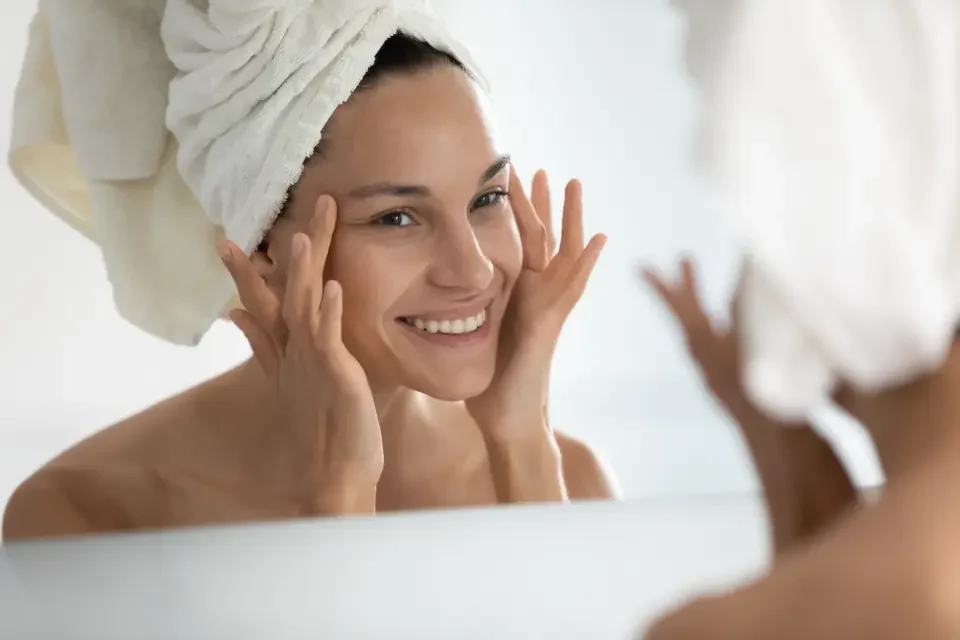
Chemical peel downtime depends on the treatment formula, peel depth, and how your skin responds. Some people experience mild redness, tightness, or flaking, while others need more recovery time. Before booking, ask your provider when you can safely resume makeup, exercise, and active skincare products.
Even a light chemical peel can require temporary adjustments to your routine. Understanding the expected healing process helps you plan work, social activities, and outdoor commitments without assuming your skin will recover on a fixed schedule.
Why Peel Downtime Varies
Chemical peels use specialized solutions to exfoliate the skin and encourage surface renewal. However, not every peel penetrates to the same depth or produces the same recovery experience.
The American Academy of Dermatology (AAD) explains that recovery varies according to treatment intensity, with deeper peels generally requiring longer healing periods.
Superficial Chemical Peels
Superficial peels primarily affect the outermost layers of skin.
These treatments often involve relatively limited downtime, although temporary redness, dryness, and visible flaking can occur.
According to the AAD, healing after a light chemical peel may take approximately one to seven days.
Some clients experience little visible peeling, while others notice more obvious changes several days after treatment.
A light peel does not guarantee that the skin will appear completely normal immediately afterward.
Medium and Deep Chemical Peels
Medium-depth peels affect deeper skin layers and generally involve more significant recovery.
The AAD identifies approximately seven to fourteen days of healing for medium peels and fourteen to twenty-one days for deep peels.
These treatments may require medical supervision, specific wound care, and additional follow-up.
These timelines are provided for comparison and do not mean that Pure Escape Resort offers medium or deep chemical peels.
Our published menu focuses on customized PCA Skin chemical peel treatments. Clients should confirm the exact treatment and expected recovery before scheduling.
Your Skin’s Condition Matters
Several individual factors can influence how the skin responds, including:
- Existing dryness or sensitivity
- Current irritation or inflammation
- Recent sun exposure
- Prescription and over-the-counter skincare products
- Previous exfoliating treatments
- The selected peel formulation
- Individual healing responses
For example, someone regularly using retinoids or exfoliating acids may require additional preparation before receiving a peel.
Your provider should assess these factors rather than relying exclusively on the treatment’s advertised intensity.
What Changes You May Notice While Healing
Chemical peel recovery does not look identical for everyone.
Some clients notice temporary redness and dryness without significant visible peeling. Others experience flaking or more noticeable exfoliation.
Immediately After Treatment
The skin may feel warm, tight, or mildly sensitive.
Temporary redness can occur, particularly around areas that received more intensive treatment.
Oregon Health & Science University (OHSU) notes that certain PCA Skin superficial peels may produce redness lasting approximately one to twelve hours, although individual responses vary.
Your skin may also look relatively normal immediately after the appointment.
That does not necessarily mean the recovery process is complete.
During the Following Days
Dryness, tightness, or light flaking may develop as the skin responds to treatment.
With some PCA Skin professional peels, localized flaking can occur over several days.
However, visible peeling is not required for a treatment to have an exfoliating effect.
Clients should not assume that more visible peeling means better results.
For additional insight into seasonal skin changes after exfoliation, read What Your Skin Won’t Tell You About Spring Peels (But Will Show).
Why You Should Not Remove Peeling Skin
Flaking skin should be allowed to shed naturally.
Pulling, scratching, or aggressively rubbing peeling areas can damage the healing surface.
The AAD warns that picking treated skin increases the risk of complications, including infection and scarring.
Use the gentle products recommended by your provider and avoid attempting to accelerate exfoliation.
What If You Do Not Peel?
Not seeing visible peeling does not automatically indicate that the treatment was ineffective.
PCA Skin explains that some professional peels produce limited visible flaking.
The degree of peeling depends on the formulation and individual skin response.
A professional should evaluate the treatment’s progress rather than using the amount of peeling as the only measure of results.
Returning to Work and Social Activities
Many people want to know whether they can return to work immediately after a chemical peel.
For suitable superficial treatments, normal nonstrenuous activities may be possible relatively soon.
However, the decision depends on your skin’s condition and the treatment instructions.
Can You Return to Work the Same Day?
Some clients receiving light peels can return to desk work or other low-exertion activities shortly afterward.
Temporary redness or tightness may still be noticeable.
If your work involves significant heat, sun exposure, physical exertion, or protective equipment that rubs against the skin, additional precautions may be necessary.
Ask your provider whether your usual working conditions are compatible with the expected recovery.
Planning Around Special Events
Scheduling a chemical peel immediately before a wedding, graduation, photography session, or important gathering can be inconvenient.
Even a treatment expected to produce minimal downtime may cause visible flaking or temporary redness.
For example, a client preparing for a weekend event should not assume that a peel performed the previous day will leave the skin completely settled.
If appearance is important for a particular date, discuss your schedule before choosing the treatment.
A provider may recommend allowing more recovery time or considering another facial treatment option.
Consider Outdoor Commitments
Outdoor activities deserve particular attention because recently treated skin may be more sensitive to sunlight.
For clients in Rock Hill, SC, regular activities such as walking outdoors, attending sporting events, or spending time by the pool can involve substantial sun exposure.
Plan for the required sun protection and any temporary restrictions.
A chemical peel appointment should fit your actual routine rather than requiring you to disregard aftercare instructions.
Makeup, Exercise, and Skincare Restrictions
Returning to everyday products and activities is an important part of chemical peel aftercare.
The correct timing depends on your treatment and the instructions provided by your skincare professional.
When Can You Wear Makeup After a Chemical Peel?
Makeup restrictions vary.
The AAD explains that some patients receiving superficial peels may be able to wear makeup immediately, while others should wait until the following day.
OHSU’s PCA Skin superficial peel instructions recommend allowing the skin to rest overnight when possible, although certain protocols permit earlier application.
These recommendations are not interchangeable with instructions for deeper peels.
At Pure Escape Resort, we recommend confirming the makeup restrictions associated with your selected PCA treatment before leaving your appointment.
If your skin is irritated, peeling significantly, or has open areas, do not attempt to conceal the condition with makeup without professional guidance.
When Can You Exercise Again?
Strenuous exercise raises body temperature and often causes sweating.
Heat and perspiration can irritate freshly treated skin.
PCA Skin’s professional peel aftercare guidance recommends avoiding activities that increase body temperature, including intense workouts, hot tubs, saunas, and excessive sun exposure.
OHSU’s instructions for certain PCA superficial peels advise avoiding activities that cause excessive perspiration during the first two days.
However, this is not a universal restriction for every peel.
Your provider should establish the appropriate return-to-exercise timeline for your specific treatment.
When Should You Restart Retinol and Exfoliating Acids?
Retinol, prescription retinoids, alpha hydroxy acids, and other exfoliating ingredients can increase irritation when introduced too soon after a peel.
These products may need to be temporarily paused.
PCA Skin recommends maintaining a simple, gentle skincare routine during recovery.
For some superficial PCA protocols, OHSU advises delaying certain retinoids for approximately five days and some additional irritating products for longer.
These are protocol-specific recommendations, not instructions to stop prescribed medications independently.
Always consult your prescribing clinician before changing prescription treatments.
How Should You Cleanse and Moisturize?
After a chemical peel, skincare should focus on gentle cleansing, appropriate hydration, and protecting the healing skin.
PCA Skin recommends using lukewarm water and avoiding products that cause unnecessary irritation.
Your provider may recommend:
- A gentle cleanser suitable for treated skin
- A compatible moisturizer
- Broad-spectrum sunscreen
- Temporary avoidance of scrubs and exfoliating products
- Avoidance of direct heat and unnecessary friction
Do not introduce several new skincare products during recovery.
Following the specific post-treatment regimen is generally more useful than trying additional products to speed up visible peeling.
For guidance on maintaining an everyday skincare routine, explore How Long Should Your Skincare Routine Take?.
Why Sun Protection Matters
The skin can be more vulnerable to ultraviolet exposure after exfoliation.
Sun exposure during recovery may contribute to irritation or unwanted pigmentation changes.
The AAD emphasizes protecting treated skin from the sun and following the provider’s aftercare instructions.
Use an appropriate broad-spectrum sunscreen as directed, avoid tanning beds, and consider protective clothing and shade.
If your skin is too irritated to tolerate a product, contact your provider for advice rather than continuing to apply something that causes discomfort.
When Recovery Needs Professional Attention
Mild redness, dryness, and temporary flaking can be expected after certain chemical peels.
However, not every reaction should be considered part of normal healing.
Symptoms That Deserve Evaluation
Contact your treatment provider or a qualified medical professional if you experience:
- Increasing rather than improving pain
- Severe or persistent burning
- Significant or worsening swelling
- Blistering that was not expected
- Spreading redness, warmth, or discharge
- Skin that appears increasingly inflamed
- Unexpected darkening or lightening of treated areas
Fever, pus, or rapidly worsening symptoms may indicate a complication requiring prompt medical assessment.
Seek urgent medical care for severe symptoms such as difficulty breathing or rapidly developing facial swelling.
Do not attempt to manage a suspected chemical burn or infection by applying additional exfoliating products.
Why Personal Risk Factors Matter
Certain individuals have a higher risk of complications, including those with active skin conditions, particular medication histories, or a tendency toward pigmentation changes.
The AAD notes that chemical peels can be performed on many skin tones, but appropriate experience and treatment selection are especially important for people at risk of post-inflammatory pigmentation changes.
Clients should disclose relevant medical history and current products before treatment.
If a more intensive medical peel is being considered, evaluation by a dermatologist may be appropriate.
Follow-Up During Recovery
Some post-peel concerns can be addressed through a conversation with the treatment provider.
Others require medical evaluation.
If you are uncertain whether a reaction is expected, contact the provider rather than waiting for it to become more severe.
Photographs taken under consistent lighting may help document changes, but they do not replace a professional examination.
Discussing Downtime Before Your Rock Hill Appointment
At Pure Escape Resort, Inc., we offer customized PCA Skin chemical peel treatments at our Rock Hill location.
Our published facial menu includes the “Turn Back Time” Peel, an Advanced option, and a treatment featuring 4% retinol.
These treatments may involve different formulations and recovery considerations.
A treatment described as advanced or containing retinol should not automatically be assigned the same aftercare timeline as another peel.
Questions to Ask Before Booking
Before selecting your chemical peel, discuss:
- Which peel formulation is being considered?
- What degree of redness, dryness, or flaking is expected?
- How long should you avoid strenuous exercise?
- When can you resume makeup?
- Which skincare ingredients must be paused?
- What sun protection and moisturizers are recommended?
- Which symptoms should prompt a call to the provider?
These questions help clarify the likely impact on your schedule.
You should also disclose recent treatments, prescription skincare products, active skin conditions, and any relevant medical concerns.
Plan for Your Individual Recovery
Our Rock Hill spa is located at 452 Lakeshore Parkway, Suite 130, Rock Hill, SC 29730.
We welcome clients visiting from nearby communities such as Fort Mill and Tega Cay at this location.
If you are considering a chemical peel before an important event, let our team know the date so we can discuss whether the treatment and anticipated recovery fit your plans.
For a broader explanation of treatment selection and possible outcomes, read our Are Chemical Peels Worth It? Benefits, Risks, and Results Explained article.
FAQs
How Much Downtime Does a Chemical Peel Require?
Superficial peels may involve minimal interruption to daily activities, but healing can take approximately one to seven days. Medium and deep peels generally require longer recovery. The exact timeline depends on the product, treatment depth, skin condition, and provider’s instructions.
When Can I Wear Makeup After a Chemical Peel?
Some superficial peel protocols permit makeup shortly after treatment, while others recommend waiting until the next day or longer. Do not apply makeup over significantly irritated, broken, or unhealed skin without professional guidance. Follow your specific treatment instructions.
Can I Exercise After a Chemical Peel?
Strenuous exercise and sweating may need to be avoided temporarily. Certain PCA Skin superficial peel protocols recommend avoiding excessive perspiration for two days. Your provider should confirm the appropriate restriction based on the selected treatment and skin response.
When Should I Contact My Provider During Recovery?
Contact your provider if you experience severe burning, worsening redness, unexpected blistering, significant swelling, or other concerning symptoms. Signs of infection or rapidly worsening reactions require prompt medical attention. Do not assume every reaction is normal peeling.
Is It Normal Not to Peel After a Chemical Peel?
Yes. Some superficial treatments produce little or no visible peeling. The amount of flaking does not reliably indicate treatment effectiveness. Your provider can explain the expected response to the particular formula used.
Plan Your Chemical Peel With Pure Escape Resort
Chemical peel downtime should be part of the conversation before treatment, not an unexpected concern afterward.
At Pure Escape Resort, Inc., we offer customized PCA Skin chemical peels and professional skincare services in Rock Hill, SC. Our team can discuss your skincare goals, evaluate relevant concerns, and explain the recovery instructions associated with available treatments.
Whether you are planning around work, an upcoming event, or your regular skincare routine, understanding the expected healing process can help you make an informed decision.
Call Pure Escape Resort at (803) 327-2520 or explore our chemical peel appointments to discuss treatment options, anticipated downtime, and the aftercare your skin may need.